A New Earth by Eckhart Tolle: A Difficult Beginning, but a Powerful Awakening
Some books hold your attention from the first page. Others make you work before they reveal why they matter.
For me, Eckhart Tolle’s A New Earth belonged firmly to the second category.
Its preface was intriguing. It created a genuine sense that I was about to enter an important conversation about consciousness, human behaviour and the possibility of personal transformation. The central promise was ambitious: that understanding and transcending the ego could change not only an individual life but also the collective direction of humanity.
Yet the first few chapters did not immediately fulfil that promise.
They felt abstract, repetitive and difficult to absorb. The language around consciousness, ego, awakening and inherited human dysfunction often appeared philosophical without being sufficiently grounded in everyday experience. There were moments when continuing the book felt less like curiosity and more like an act of discipline.
The opening chapters, in my view, failed to do justice to the interest created by the preface.
But the book gradually changed.
As Tolle moved from broad spiritual claims to recognisable human behaviour, the ideas became clearer. Complaining, wanting, resentment, social roles, emotional triggers, possessions, relationships and the constant voice in our heads gave practical form to the earlier philosophical arguments.
The later sections finally delivered what the preface had promised.
A New Earth is therefore not necessarily a book that wins you over immediately. It is a book that asks for patience. Once its ideas begin to connect with ordinary life, it becomes far more relevant, uncomfortable and potentially transformative.
What Is A New Earth About?
A New Earth is fundamentally about the relationship between human consciousness and human suffering.
Tolle argues that much of what we consider normal human behaviour is shaped by an unconscious identification with the ego. This ego creates a mental version of the self from possessions, memories, opinions, achievements, failures, social roles and other people’s perceptions.
The book’s central argument is that this constructed identity is not our complete or deepest self.
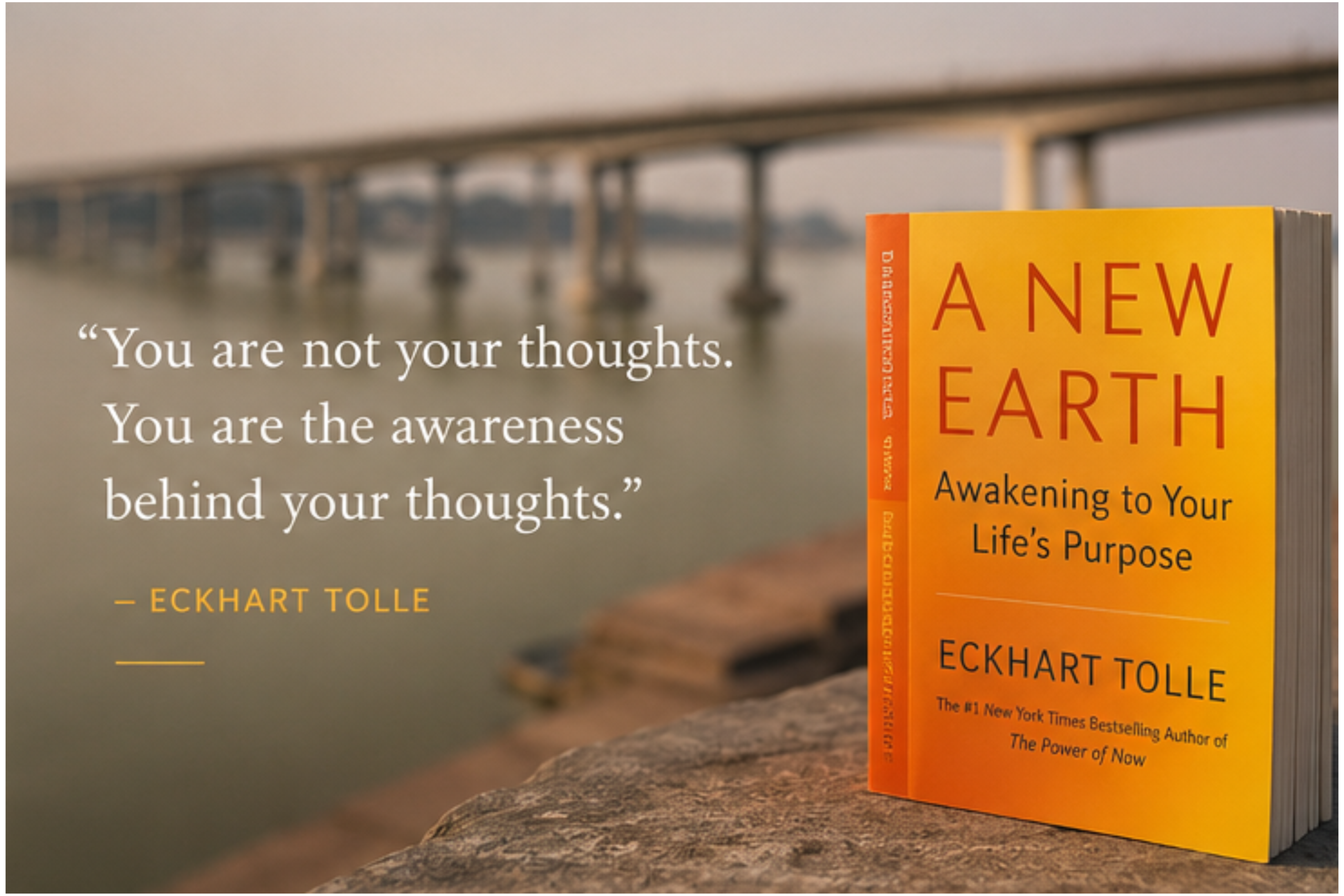
According to Tolle, humanity’s recurring dissatisfaction, conflict and destructiveness come from failing to recognise this distinction. People believe that they are their thoughts, personal histories, labels and emotional reactions. They therefore spend their lives defending, enlarging or repairing an identity that can never feel permanently secure.
The uploaded summary describes the book as a journey towards a deeper understanding of consciousness. It explains that ego-driven attachments create dissatisfaction and that moving beyond the ego is presented as important for personal fulfilment and a more harmonious world.
In simpler terms, the book asks:
What would happen if we stopped treating every thought, emotion, possession, opinion and social identity as the definition of who we are?
That question forms the foundation of the book.
A Quick Summary of A New Earth
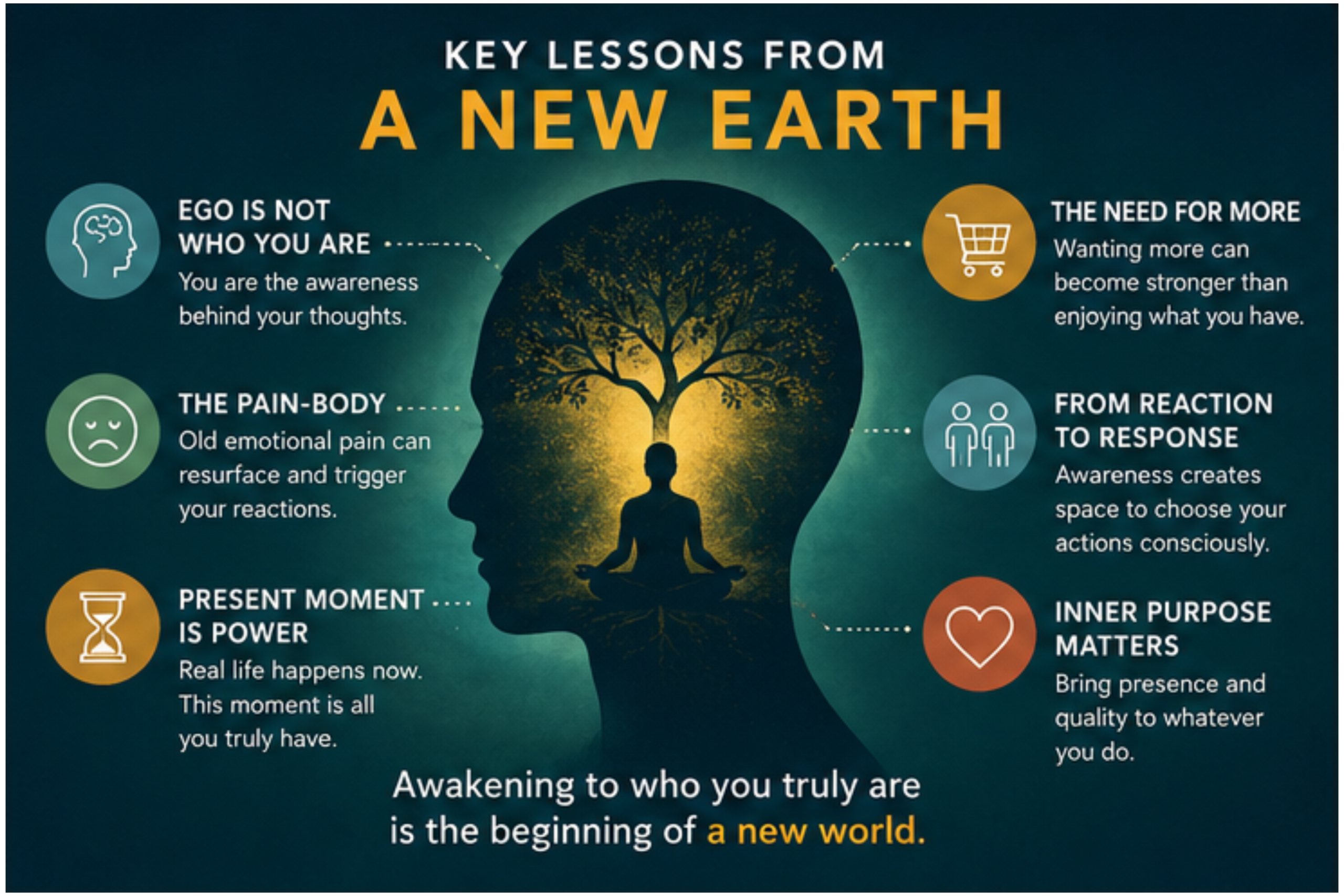
he main message of A New Earth can be summarised in a few connected ideas:
Human beings have inherited dysfunctional patterns of thought. These patterns produce fear, greed, separation, conflict and dissatisfaction.
The ego is the identity created from thoughts, possessions, roles, memories, comparison and external validation.
Emotional pain from the past can remain active within us and influence present reactions. Tolle calls this accumulated emotional energy the “pain-body.”
Awareness allows us to observe thoughts and emotions without completely identifying with them.
The present moment is the only place where conscious action is possible.
Our outer purpose concerns what we do, while our inner purpose concerns the consciousness we bring to what we do.
A transformed society cannot be created by unconscious individuals using the same patterns of ego, hostility and domination.
The “new earth” is therefore not simply a future political system, technological achievement or perfect civilisation. It represents a different quality of human consciousness expressed through present actions.
1. Humanity’s Inherited Dysfunction
Tolle begins with a rather severe diagnosis of humanity.
Despite extraordinary achievements in science, technology, art and culture, human beings continue to create war, exploitation, environmental destruction and social suffering. Intelligence has advanced, but wisdom has not necessarily advanced with it.
The book refers to different religious and philosophical traditions that have described this dysfunction in different ways. Hinduism speaks of maya, Buddhism discusses dukkha, and Christianity describes humanity’s separation from its deeper nature through the idea of original sin.
Tolle’s point is not that human beings are inherently evil. His argument is that our ordinary state of consciousness is frequently distorted.
Fear, greed and the desire for power are not isolated problems. They emerge from a deeper perception of separation: the belief that the self is a small, threatened identity competing against other identities.
This is also where the book’s early difficulty arises.
Tolle begins at the level of civilisation, consciousness and spiritual evolution. These are enormous ideas, and the early chapters do not always give the reader enough practical ground on which to stand. The argument becomes easier to appreciate only when the book moves from humanity’s collective dysfunction to the behaviour of ordinary individuals.
Because humanity, as usual, is an abstract concept until someone criticises our opinion, overtakes us in traffic or receives more attention than we do.
2. Understanding the Ego
The ego is the most important concept in A New Earth.
In everyday conversation, ego often means arrogance. Tolle uses the word more broadly. For him, ego is the mental identity we create and continuously defend.
It is built through statements such as:
“I am successful.”
“I am a failure.”
“I belong to this group.”
“This is my position.”
“These are my achievements.”
“This is what people think of me.”
“I am right, and they are wrong.”
Not all these statements are factually incorrect. The problem begins when they become the entire basis of identity.
A profession is useful. A name is necessary. Social and cultural identities can be meaningful. Memories help us learn. Problems arise when these temporary forms are treated as the complete self.
Once identity depends on external forms, it becomes fragile. A disagreement feels like a personal attack. Someone else’s success feels like our loss. Criticism threatens our worth. Losing a position, relationship or possession can feel like losing a portion of ourselves.
The book describes awakening as the shift from being completely identified with thoughts to recognising oneself as the awareness observing those thoughts.
This does not mean that thoughts should disappear. It means we stop obeying each thought as though it were an unquestionable command from headquarters. The mind is a useful instrument, but human beings have somehow allowed the instrument to appoint itself as chief executive.
3. Identification With Possessions and the Need for More
One of the book’s strongest sections concerns material possessions.
Tolle does not claim that objects are inherently harmful. Homes, clothes, vehicles, technology and beautiful things can serve practical or aesthetic purposes. The difficulty arises when possessions become psychological extensions of identity.
Advertising frequently operates through this weakness. It rarely sells only the practical function of a product. It sells confidence, prestige, desirability, status or belonging.
We are encouraged to believe that a purchase will complete an unfinished version of ourselves.
The satisfaction, however, rarely lasts. The ego enjoys acquisition but quickly becomes familiar with what it has. It then needs something newer, rarer or more visible.
The book describes this as the need for more. Wanting can become more psychologically powerful than having. Since lasting identity cannot be created through temporary objects, the search continues indefinitely.
This idea is particularly relevant in the age of social media.
Possessions are no longer merely owned. They are displayed, framed, filtered and placed before an audience. Experiences themselves can become identity products. A café visit, holiday, professional milestone or social initiative may be valued partly by how effectively it supports the image we want others to see.
A New Earth asks us to examine our relationship with the word “my.”
My phone. My car. My organisation. My achievement. My influence. My city. My cause.
The question is not whether we should stop owning or creating things. The question is whether our worth collapses when those things are absent, unnoticed or attributed to someone else.
4. Complaining, Resentment and the Need to Be Right
Tolle’s discussion of complaining is among the most immediately recognisable parts of the book.
Complaining appears harmless. Sometimes it is necessary to identify a genuine problem. But habitual complaining can also give the ego a small sense of superiority.
The complaint silently declares:
“I understand what is wrong.”
“I would have handled it better.”
“They are incompetent.”
“I am the reasonable person in this situation.”
The book explains that fault-finding and reactivity strengthen the ego’s sense of separation. By making another person wrong, the ego feels more firmly right.
This is not an argument for silence in the face of injustice, corruption or poor governance.
There is an important difference between identifying a problem and building an identity around resentment.
A conscious response asks: What is happening, what is needed and what can be done?
An ego-driven response asks: Who can I blame, how can I prove my superiority and who will recognise that I was right?
Both may use similar words. Their inner motivations are completely different.
This distinction is relevant to public conversations in Patna and Bihar. We frequently discuss traffic, civic behaviour, public infrastructure, employment, migration, education and governance. Criticism is necessary, but criticism without responsibility can become a form of entertainment.
Outrage creates visibility. Action creates change.
A city cannot improve simply because its citizens have become highly skilled at describing everything wrong with it.
5. The Pain-Body: How the Past Reappears in the Present
Another central concept in the book is what Tolle calls the “pain-body.”
The pain-body should be understood as Tolle’s spiritual and psychological metaphor, not as a medical diagnosis. It refers to accumulated emotional pain that remains active within a person.
An argument may appear to concern a minor present event, but the emotional intensity may come from years of unresolved hurt, rejection, humiliation, fear or abandonment.
A small incident becomes a doorway through which an entire history enters the room.
The pain-body can remain relatively inactive and then become triggered by a person, memory, financial problem, relationship conflict or situation resembling earlier pain. Once active, it influences thoughts and interpretations. Neutral events begin to appear hostile. The mind produces stories that match the emotional state.
The book suggests that the pain-body may even seek conflict because conflict provides the negative emotional energy through which it survives. Relationships can become repetitive cycles in which each person’s pain activates the other’s.
The uploaded text explains that triggers connected with old emotional wounds can produce disproportionate reactions. Awareness creates the possibility of alert observation instead of automatic escalation.
This idea can be impactful because it changes the question we ask during emotional conflict.
Instead of asking only, “What did this person do to me?” we might also ask, “What older pain has this situation activated?”
That does not excuse harmful behaviour. It helps us understand why certain events gain extraordinary emotional power.
The book’s proposed response is presence: observing the emotional reaction without immediately becoming its spokesperson.
That pause may be only a few seconds, but it can prevent an old wound from making a new decision.
6. The Voice in the Head
Most people experience an almost continuous stream of internal commentary.
The mind evaluates, rehearses, judges, predicts, compares and revisits. It imagines future disasters and conducts arguments with people who are not even present, an impressively inefficient use of human intelligence.
Tolle calls attention to the distinction between thoughts and the awareness that notices thoughts.
The moment we notice the voice in the head, a small separation appears. There is the thought, and there is the awareness observing it.
This is one of the most practical ideas in the book.
A thought such as “I am going to fail” can be experienced in two ways.
The unconscious response is: “I am going to fail, and this thought is the truth.”
The conscious response is: “I notice that my mind is producing a fear-based prediction.”
The external situation may not change immediately. But our relationship with the thought changes.
Tolle does not ask readers to replace every negative thought with forced positivity. He asks them to recognise that thinking is an activity occurring within consciousness, not the totality of who they are.
7. Roles, Labels and the Performance of Identity
We all occupy roles.
Parent, child, teacher, student, founder, employee, leader, activist, creator, professional or public figure.
Roles are necessary for society to function. Trouble begins when we no longer perform a role but become trapped inside it.
A leader may become more concerned with appearing powerful than solving problems. A teacher may protect authority rather than support learning. A parent may treat a child as an extension of personal ambition. A social worker may become attached to recognition for helping others.
Even happiness can become a role. People sometimes perform enthusiasm, confidence or positivity because they believe it is expected of them.
Tolle’s alternative is not to abandon responsibility. It is to perform our functions without allowing them to completely define our identity.
You can lead without needing to dominate.
You can serve without needing applause.
You can disagree without turning another person into an enemy.
You can succeed without making someone else’s success a threat.
This distinction is highly relevant for community work. Social initiatives often begin with a meaningful purpose but gradually become entangled with ownership, visibility, credit and hierarchy.
The question quietly shifts from “How can this work help people?” to “Will people know that I helped?”
The work may continue, but its energy changes.
8. The Present Moment Is Not Passivity
One common misunderstanding of Tolle’s philosophy is that accepting the present means tolerating everything or avoiding action.
That is not the most useful interpretation of the book.
Acceptance means seeing the current reality without wasting additional energy denying that it exists.
Suppose a road is damaged. Acceptance does not mean declaring the road spiritually perfect and driving peacefully into a crater. It means first recognising the condition clearly, without allowing anger to destroy the quality of the response. From that clarity, one can document the problem, contact authorities, organise citizens or seek accountability.
Resistance says, “This should not be happening,” while remaining emotionally trapped in the fact that it is happening.
Acceptance says, “This is happening. What is the most intelligent action available now?”
The book repeatedly links presence with better action. Inner stillness does not eliminate responsibility. It can reduce impulsive and ego-driven behaviour, creating space for what Tolle calls “right action.” The uploaded summary explains that right action emerges when a person responds to the needs of the moment rather than reacting primarily from personal desire.
9. Inner Purpose and Outer Purpose
The final sections of A New Earth turn towards purpose.
Tolle distinguishes between outer purpose and inner purpose.
Outer purpose includes what we want to accomplish: building a career, supporting a family, running an organisation, writing a book, starting a business or creating social impact.
Inner purpose concerns the quality of consciousness we bring to those activities.
Outer purposes change. A job ends. A project succeeds or fails. An organisation evolves. A person retires. A goal that once seemed important may later lose its meaning.
Inner purpose remains connected with presence.
The book therefore does not argue that goals are meaningless. It argues that goals alone cannot provide lasting identity or fulfilment.
A person may achieve an admirable outer purpose through anxiety, hostility and exhaustion. Another may perform a modest task with complete attention, dignity and care.
Tolle asks us to consider whether success should be measured only by outcomes or also by the state of consciousness expressed through the journey.
The uploaded text explains that outer responsibilities can become hollow when disconnected from inner alignment. It redefines success as bringing full presence and quality to each action rather than living exclusively for a future result.
This is one of the book’s most valuable ideas for young people.
Ambition is not the enemy.
The danger lies in believing that life begins only after admission, employment, recognition, funding, marriage, migration, promotion or financial success.
When every present moment becomes merely a bridge to a supposedly better future, a person can spend an entire life waiting to arrive.
10. Acceptance, Enjoyment and Enthusiasm
Tolle describes three forms of conscious or “awakened” action:
Acceptance applies when a task is necessary but not enjoyable. Instead of adding resentment, we perform it willingly and calmly.
Enjoyment emerges when we are fully present in an activity rather than using it only as a means to an end.
Enthusiasm combines enjoyment with a meaningful goal or vision.
The book contrasts enthusiasm with stress. Both can produce energetic activity, but they arise from different states.
Stress treats the present as an obstacle to the future.
Enthusiasm values the present activity while moving towards a goal.
The uploaded summary describes enthusiasm as deep enjoyment combined with a vision, while stress emerges when reaching the goal becomes more important than the quality of the journey.
This is particularly relevant to entrepreneurship, activism and creative work.
A mission can inspire people, but obsession with outcomes can also turn the mission into a source of hostility, burnout and control.
Enthusiasm is not endless excitement. Energy naturally rises and falls. Conscious action also requires rest, reflection and the ability to release an idea when it no longer serves its purpose.
How Can A New Earth Create an Impact?
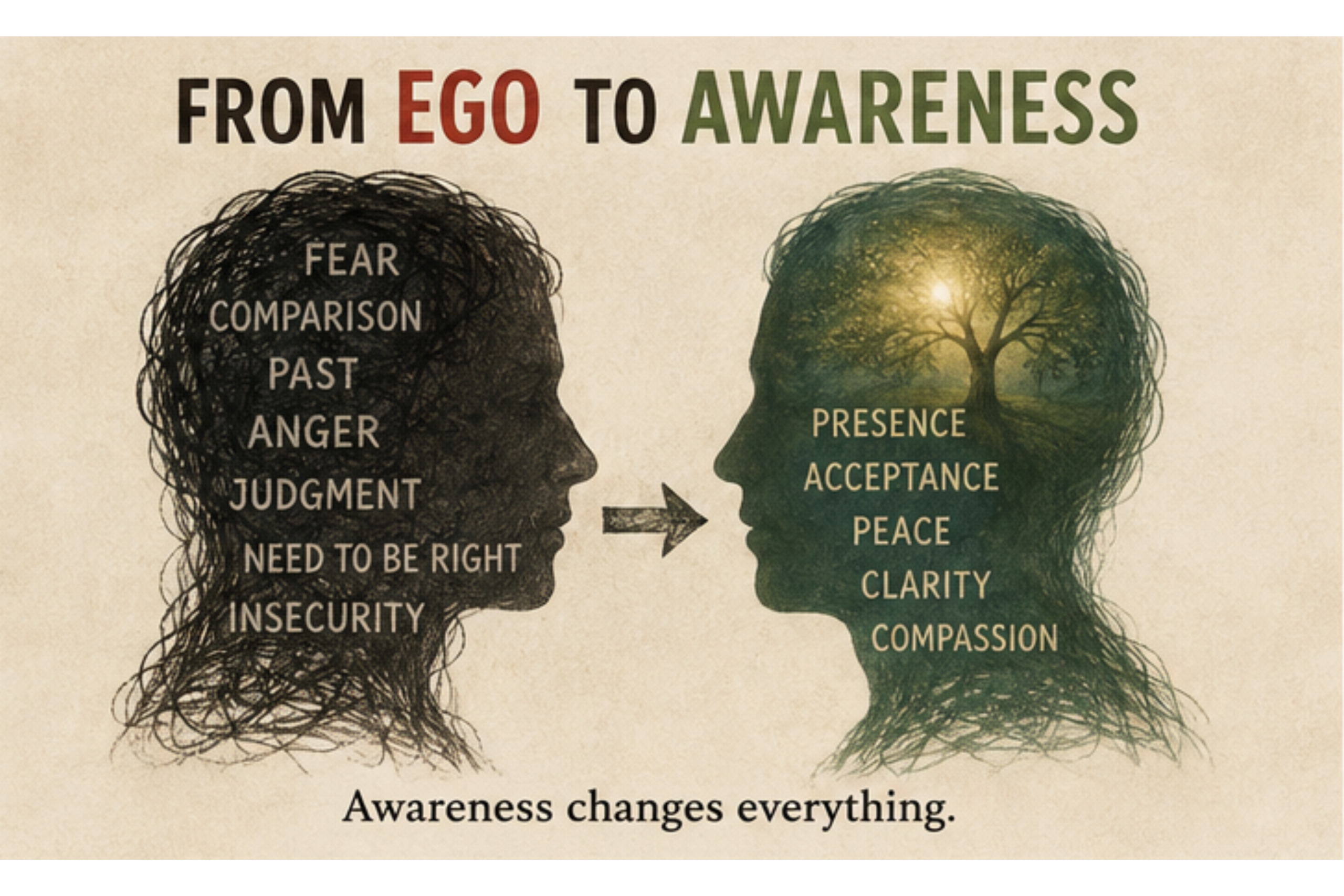
he book’s real impact does not come from agreeing with every spiritual claim. It comes from recognising its concepts in everyday behaviour.
It can improve self-awareness
The book encourages readers to notice thoughts, emotional patterns and identity-based reactions.
This can create a small but important gap between stimulus and response. Instead of automatically reacting, a person gains the possibility of choosing.
It can change relationships
Many conflicts are intensified by the desire to win, punish, dominate or establish moral superiority.
Recognising ego does not guarantee harmony, but it can help us distinguish between solving a problem and defeating a person.
It can change our relationship with ambition
The book does not require abandoning achievement. It asks whether ambition comes from contribution or inadequacy.
The same goal can be pursued through fear, comparison and insecurity or through enjoyment, service and enthusiasm.
It can reduce compulsive comparison
When identity is built around status, other people’s achievements become threatening.
A less ego-centred identity makes it easier to appreciate another person’s success without interpreting it as evidence of personal failure.
It can make community work more honest
Community initiatives can reproduce the same ego patterns they claim to challenge. Rivalries, ownership, visibility and personal credit can overwhelm the purpose.
Tolle’s ideas ask organisers to examine whether they are serving the mission or using the mission to strengthen an identity.
It can improve the quality of action
Presence allows greater attention to the actual situation.
Instead of repeating rehearsed positions, a person listens.
Instead of reacting to assumptions, they examine facts.
Instead of acting merely for recognition, they consider what the moment genuinely requires.
A New Earth Through the Lens of Patna Diaries
Patna Diaries was created to promote what is good about Bihar, support young talent and encourage meaningful conversations about the city and its future.
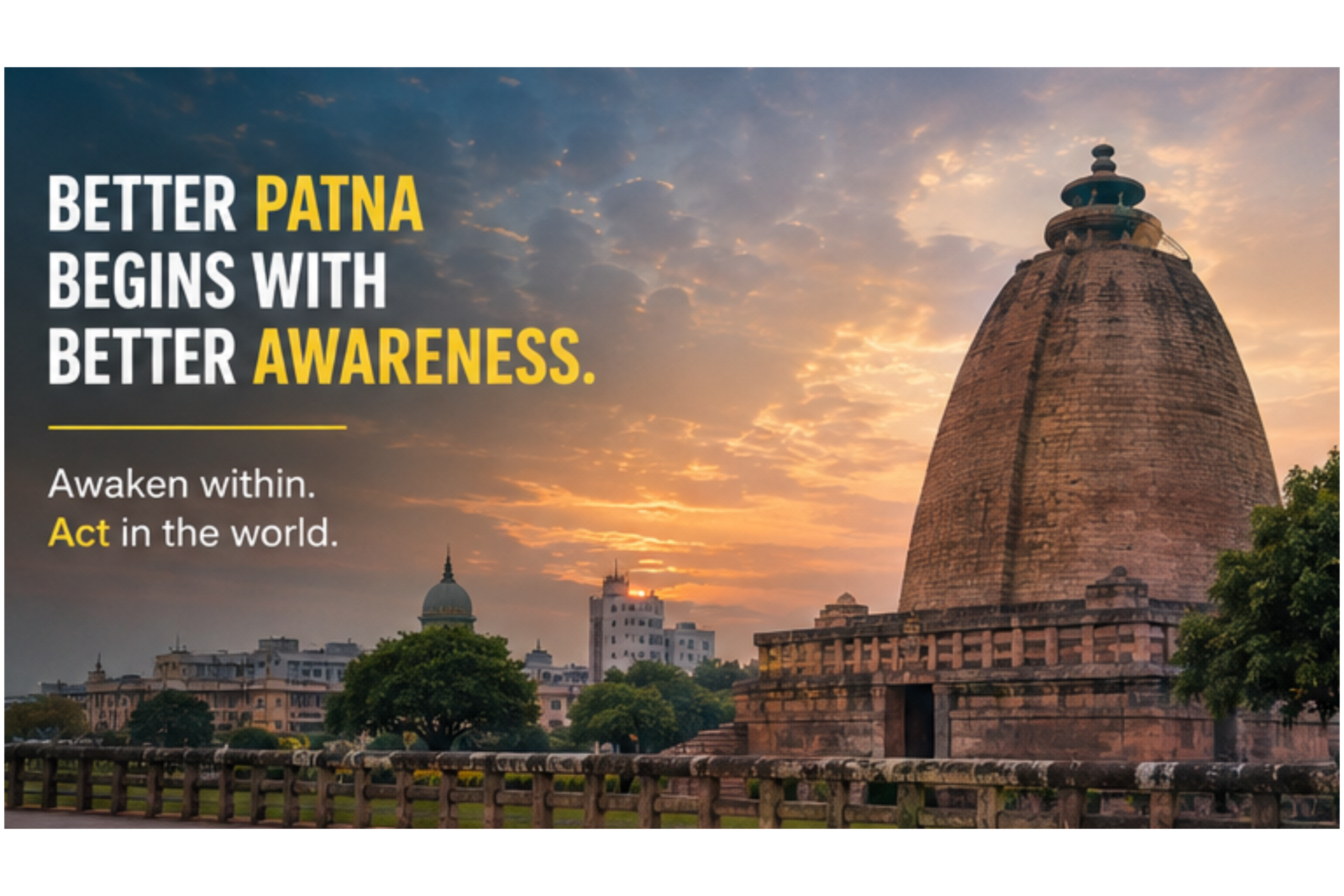
At first glance, that mission appears focused on the outer world: culture, food, entrepreneurship, civic awareness, creativity, community and development.
A New Earth offers an important contrast.
It suggests that improving the external world without examining the consciousness behind our actions may recreate the same problems in new forms.
We may build new organisations but preserve old hierarchies.
We may create youth communities but continue competing for personal visibility.
We may criticise political division while treating every disagreement as an attack.
We may campaign for civic responsibility while behaving impatiently in traffic.
We may speak about supporting local talent but feel threatened when another person receives attention.
This does not mean Patna needs meditation instead of infrastructure, awareness instead of employment or spirituality instead of governance. That would be a convenient but deeply insufficient conclusion.
Patna needs better systems, roads, institutions, professional cultures, opportunities and public accountability.
But systems are operated by people.
If the individuals within those systems remain driven entirely by fear, resentment, status and personal advantage, institutional reform eventually inherits the same dysfunction.
This is where A New Earth connects with the motivation of Patna Diaries.
From complaining to participation
PatnaDiaries cannot merely become another platform that documents what is wrong with the city.
The challenge is to convert awareness into participation.
A civic issue should lead not only to anger but also to research, communication, collaboration and action.
From visibility to contribution
Young people increasingly live within economies of attention. Social work, creativity, entrepreneurship and even personal experiences are displayed publicly.
Visibility can help a cause grow, but visibility should remain a tool rather than the purpose.
The more important question is not “Who received the credit?” but “Did the work create value?”
From identity to community
A community cannot survive if every participant enters primarily to establish status.
Real community requires listening, patience and the ability to allow other people to contribute without controlling them.
From future promises to present responsibility
Bihar is frequently discussed through two extremes: nostalgia for its history and promises about its future.
Tolle’s emphasis on the present offers a useful correction.
A better Bihar cannot exist only in speeches, branding campaigns or imagined future development. It has to appear in current behaviour: how we drive, work, collaborate, treat service workers, support creators, respond to women’s safety and care for public spaces.
A “new Patna” begins through very ordinary acts, which is mildly inconvenient because humans generally prefer dramatic announcements to daily discipline.
Where the Book Becomes Difficult or Unconvincing
A meaningful review should not treat the book as unquestionable truth.
A New Earth has limitations.
The early chapters are unnecessarily difficult
The preface creates curiosity, but the opening sections remain abstract for too long. Concepts such as collective consciousness, human evolution and egoic dysfunction are repeatedly introduced before they are adequately illustrated.
Readers unfamiliar with spiritual literature may struggle to remain engaged.
The later chapters are more effective precisely because they discuss recognisable experiences such as possessions, grievances, emotional triggers and social roles.
Some ideas are presented as universal
Tolle often writes as though the transformation of consciousness operates in essentially the same way for everyone.
Human behaviour is also influenced by culture, poverty, trauma, mental health, family systems, discrimination and material conditions. Awareness can help, but it does not erase these realities.
Inner transformation cannot replace structural change
Corruption, inequality, unemployment, violence and weak public institutions cannot be resolved only through personal presence.
Conscious individuals still need to build laws, organisations, systems and accountability mechanisms.
The book’s conclusion presents the “new earth” not as a conventional future utopia but as a transformation beginning through present awareness. The uploaded material itself notes the criticism that consciousness alone may oversimplify social and political problems requiring tangible structural action.
The most balanced reading is therefore not “inner change instead of outer action.”
It is inner awareness combined with intelligent outer action.
Spiritual concepts should not replace professional care
The pain-body can be a useful metaphor for emotional patterns, but it is not a substitute for psychological assessment, counselling or medical treatment where those are required.
Not every form of suffering can be resolved simply by observing it.
Practical Lessons From A New Earth
The book becomes useful when converted into small practices.
Notice the reaction before defending it
When anger or defensiveness appears, observe it briefly before speaking. Ask whether the response concerns the actual situation or an older insecurity.
Separate facts from identity
A disagreement with your opinion is not automatically a rejection of you.
Correcting an idea does not diminish the person holding it.
Examine habitual complaints
For every recurring complaint, decide whether action is possible.
Act where you can. Communicate where necessary. Stop repeatedly feeding grievances that serve no practical purpose.
Observe your relationship with recognition
Notice how you react when your contribution is ignored, another person receives credit or someone else succeeds.
The reaction reveals where identity remains dependent on external validation.
Bring complete attention to ordinary work
Presence is not reserved for meditation.
It can be practised while writing an email, meeting someone, designing a poster, driving, teaching, cleaning or preparing food.
Use the present as the starting point
Acceptance begins with an honest assessment of what exists now.
Only then can action become specific and effective.
Pursue goals without postponing life
Work towards future achievements, but do not make the future responsible for all happiness, confidence and meaning.
Who Should Read A New Earth?
This book may be valuable for readers who:
- feel trapped in comparison, resentment or overthinking;
- are interested in spirituality without rigid religious affiliation;
- want to examine the relationship between identity and possessions;
- repeatedly encounter similar emotional conflicts;
- are pursuing ambitious goals but feel disconnected from the process;
- work in leadership, community-building, entrepreneurship or public service;
- want to understand the difference between reaction and conscious action.
It may be frustrating for readers seeking a fast, structured self-help guide. The book develops through reflection rather than a conventional step-by-step framework.
Patience is necessary, particularly during the early chapters.
Final Thoughts
My experience with A New Earth was divided.
The preface captured my interest, but the first chapters nearly lost it. They were dense, abstract and did not immediately justify the expectation the opening had created.
Continuing, however, proved worthwhile.
The book became more persuasive when it stopped speaking only about humanity’s consciousness and began revealing humanity in familiar behaviour: the need to possess, complain, compare, win, perform roles, carry old pain and seek validation.
Its greatest value lies not in offering a perfect theory of human existence. It lies in giving readers a language through which they can observe themselves.
The ego is easier to discuss as a philosophical concept than to recognise in our own irritation, ambition and desire for credit.
Presence is easier to admire than to practise during disagreement.
Community is easier to celebrate than to build without competition.
A better world cannot be produced entirely by private reflection. It requires institutions, participation, courage and measurable action. Yet action without awareness can reproduce the very dysfunction it intends to solve.
That is the central impact of A New Earth.
It reminds us that personal consciousness and public life are not completely separate. The quality of the world we create is influenced by the quality of attention, intention and awareness we bring into it.
For Patna Diaries and its audience, the message is particularly relevant:
Promoting what is good about Bihar should not mean ignoring its problems. Criticising its problems should not become a substitute for contributing. Building a better city requires both inner responsibility and outward participation.
The “new earth” may sound like a vast spiritual idea.
In practice, it begins with a smaller challenge:
Can we meet this person, this problem, this city and this moment without allowing fear, ego and old resentment to make every decision for us?
The answer will not arrive through a slogan.
It will appear in what we do next.